We use cookies to make this site work. We'd also like to set optional cookies so we can understand how the site is used and improve it. We will not set optional cookies unless you accept them. You can change your choice at any time from the Cookie settings link in the footer.
Strictly necessary cookies
These cookies are required for the site to work. They store your cookie preferences and keep your session secure. They are exempt from consent under PECR Regulation 6(4) because they are essential to deliver the service you have requested.
Optional cookies
Optional cookies help us understand how the site is used and provide additional features such as analytics, accessibility tools and translation. We will only set them if you accept.
October at The NHS Primary Care Gambling Service
October was another busy month for the NHS Primary Care Gambling Service (PCGS), with new partnerships, public events, national campaigns, and continued support for people affected by gambling harm across England.
Working With Partners Across the Country
At PCGS, we understand that effective support for gambling harm must be long-term and holistic. To provide wraparound care for our patients, we continue to build relationships with key stakeholders across healthcare, the third sector and the wider community. During October, we formed new partnerships and strengthened existing ones.
For example, we've continued building relationships with local authorities across England to help them support their residents experiencing gambling harm.
We have continued working with local authorities across England to assist them in supporting residents experiencing gambling harm. In October, we met with public health representatives from Lincolnshire County Council, North Lincolnshire Council, Bedford Borough Council, Central Bedfordshire Council and Milton Keynes Council to support their Joint Strategic Needs Assessments and help them develop local gambling treatment pathways.
We also met with Birmingham City Council’s Director of Public Health and introduced our service and offer to the public health team at Halton Borough Council.
In the South East and London, we met with public health officials from Reading, Hampshire, the Isle of Wight and Tower Hamlets to contribute to local treatment plans and offer support to their residents.
Our partnership work extends beyond local government to the third sector.
At the beginning of October, we delivered our ‘Ask, Advise, Act’ training session to staff at PayPlan, which provides free debt advice and support. We are pleased to be working with them to support people experiencing financial harm due to gambling harm. The training helps their team identify gambling harm, raise it in conversations with service users and signpost them to support.
We also met with representatives from Citizens Advice Wokingham to explore how we can work together to support their local service users. Similarly, we met with The Shaw Trust, an employment support service for young people in West London, to discuss referral pathways for young people in the capital affected by gambling harm.
These partnerships help us reach patients across the country and ensure they receive wraparound care from both us and local providers. We are delighted to be working with these organisations to achieve the best possible outcomes for our patients.
Engaging the Public
Over the last month, we attended multiple events hosted by stakeholders and partners to speak directly to the public about gambling harms and the support available at our service.
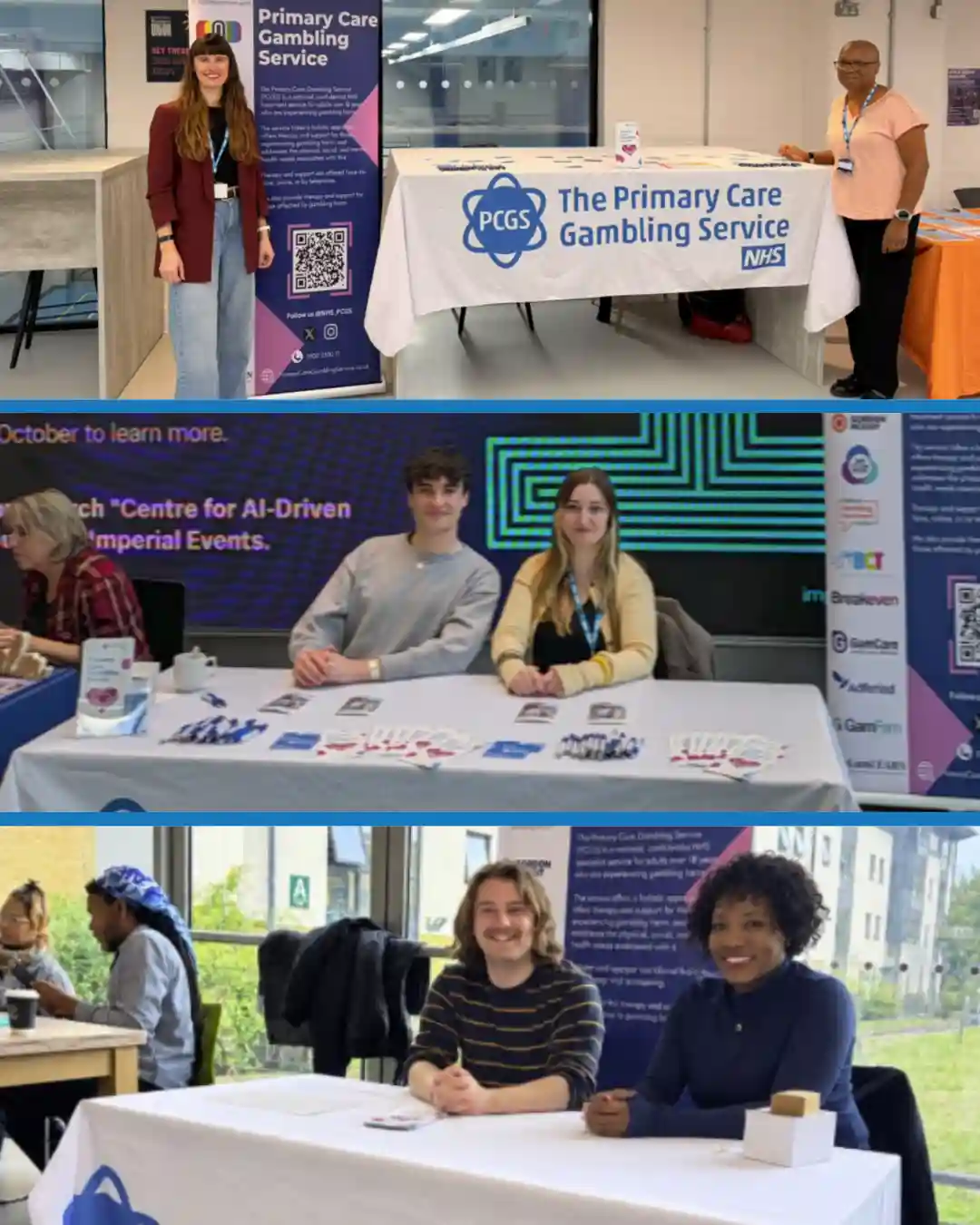
We've continued our work with universities to reach students in need of gambling support. Early in October we visited London South Bank University for their Freshers Fair. Then we were invited to Imperial College by their student finance support team for their annual Financial Education Fair. Finally, we visited the University of Roehampton for their Student Support Fair.
Students face specific risk factors associated with gambling harm and younger people are often targeted by advertising and high-risk products. Working with these universities is key to making sure that these young people understand the risks associated with gambling harm and that they are aware of the support available to them.
Campaigns
There were multiple national health and wellbeing campaigns that PCGS took part in last month.
The first of these was World Mental Health Day on the 10th. This was a day to recognise the importance of good mental health, and we reaffirmed our commitment to improving the mental wellbeing of our patients. We understand the impact that gambling harm can have on mental health (over half of our patients reported experiencing depression or anxiety) which is why we've developed our empathetic, person-centred approach to promote our patients' wellbeing and reduce gambling harm.
The next campaign we took part in was ADHD Awareness Month. We made informational posts about how ADHD interacts with gambling and how we're supporting our patients with ADHD, whether they have an official diagnosis or not. We know that impulsivity is a common feature of ADHD, and this can increase someone's risk of experiencing gambling harm. To support our patients, we've hired therapists who are specialised in supporting those with ADHD, and we run online peer-support groups for our neurodivergent patients so they can access safe community support.
Finally, we marked Sober October this year. Comorbid addictions are common for people experiencing gambling harm, and we see patients also experiencing alcohol dependency. For Sober October, we stressed how we provide holistic support and look at each individually. As well as support for gambling harm, PCGS helps with any related physical, mental or social health – including alcohol dependency.
Recognised For Our Work
We were incredibly proud to announce this month that PCGS has been shortlisted by the Royal College of Psychiatrists for the 'Psychiatric Team of the Year: Working Age Adults Award' at their annual RCPsych Awards. This shortlisting reflects the amazing work that our clinical team does, and we're excited to attend the award ceremony in London in November.
The NHS Primary Care Gambling Service Provides free and confidential support for adults experiencing gambling harm across England. If you're worried about gambling, we're here to help. Give us a call on 0300 0300 111 or complete our registration form to refer for support today.
Published: Nov 11, 2026